My plans are materializing. The first is to spend more time writing and marketing my books. On Saturday January 10th I’ll be at Barnes & Noble in Kalispell for a book signing. The featured book is a True Crime set in Montana. It was published about ten years ago, but the pedophile topic remains relevant. My goal in writing the book was to raise awareness and protect children.
I will also have other books to peruse.
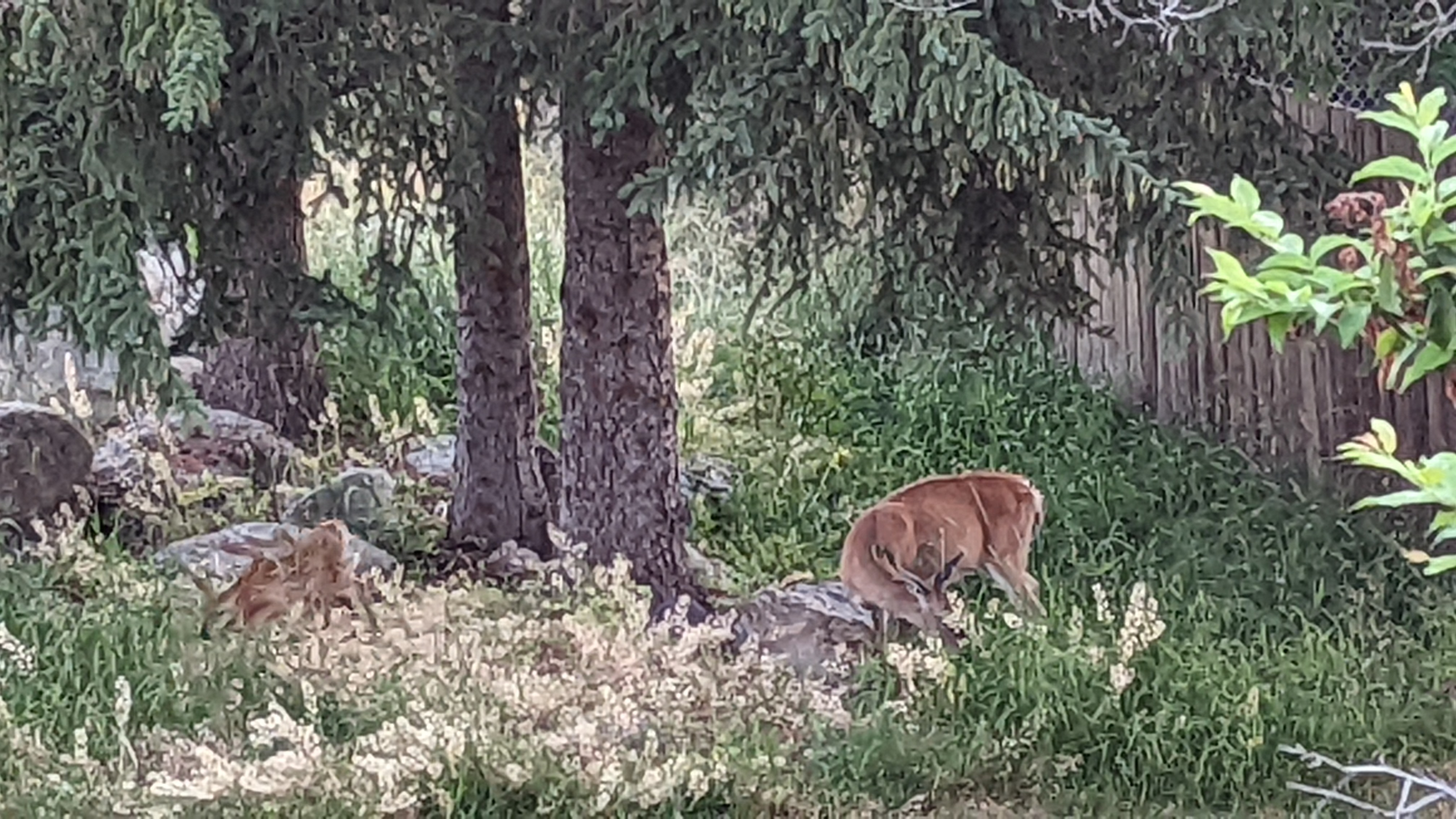
Before sunrise, I’m typically at my east facing computer desk. From there, I can see the sky lighten and watch deer families wandering through the yard. Surrounded by motivational reminders, photos of people and places I love, a collection of interesting rocks and fossils, I read the news, answer a few emails and write.
I have the next two medical thrillers in the Deadly series with protagonist Dr. Kelly McKay in process to be completed this year. Deadly Wind is set in Montana and Deadly Gold in Nevada where trouble finds the traveling contract ER physician no matter where she goes.
I hope to see you Saturday at Barnes & Noble at 2375 US-93 in Kalispell. I’ll be there from 1-3 p.m.
Bird flu is caused by the Highly Pathogenic Avian Influenza A (H5N1) Virus.
Who gets it?
Birds are primarily infected. Most wild birds can be infected without appearing ill. If it spreads to poultry (chickens, ducks, turkeys and geese) the birds may become very ill and die. When outbreaks in large flocks occur, the birds are all euthanized in an attempt to stop the spread. This may involve euthanizing millions of birds. With the spread of this disease our food sources may be more expensive or limited.
Most common songbirds do not become infected with viruses that are dangerous and spread to poultry or people.
Although it is primarily an avian disease, it is transmitted to many animals and there have been outbreaks in dairy cows in contact with infected chickens, and in wildlife that presumably scavenged infected dead birds.
Migratory waterfowl, swans, geese, ducks, shorebirds, chickens and turkeys are all susceptible. Recently two grizzly bears in Montana were found ill and euthanized, both had bird flu. In Washington State, mountain lions in the wild died of bird flu and 20 large cats in a sanctuary including cougars and a Bengal tiger were killed. It has also infected goats, polar bears in the Arctic, fur seals in Antarctica, raccoons, foxes skunks, ferrets, cats and dogs.
Humans have developed the bird flu, typically from close exposure to sick fowl. One person died who had high exposure and chronic health problems.
How is it spread?
Body fluids from infected or dead birds spread the disease through close contact in flocks and to people handling sick or dead birds by contact or breathing in droplets or dust.
How can you prevent spreading the virus?
People handling sick or dead birds should wear N95 masks that fit tightly to the face and wear gloves. Protective clothing may also be needed.
Humans have become infected by breathing the virus in droplets in the air or dust, and by touching contaminated surfaces, then touching their eyes, nose or mouth. Wash hands, surfaces and tools with soap and water. Also use anti-bacterial/anti-viral sprays to clean surfaces.
If you are a backyard flock owner there are online guidelines available. Pets and flocks need to be monitored closely. Report concerns to your veterinarian and the health department.
What are the symptoms?
Animal and bird behavior: inactivity, sleeping more than usual, poor balance, walking in circles, tremors, and seizures. Birds may breathe with the beak open, wing drooping, feathers fluffed, discharge around beak, nostrils, eyes.
Human symptoms: fever, chills, cough sore throat, trouble breathing, headache, runny nose, eyes tearing with redness and discharge from the eyes, muscle aches and diarrhea. The symptoms usually begin within ten days of exposure. Infections should be reported to the state health department.
What is the treatment for humans?
Antiviral medications such as Tamiflu can be used to treat and prevent bird flu after known contact such as unprotected exposure (ex. not wearing a mask or eye protection).
What about consuming milk, chicken and eggs?
Do not eat infected fowl or drink raw unpasteurized milk. Do not eat ice cream or cheese made from raw milk. More testing is required to determine safety of these products.
Poultry and eggs must be cooked to 165 degrees to kill bacteria and viruses. Cooking beef and other meats to 165 degrees for safety.
Is vaccination available?
The US has a stockpile of vaccine developed for H5N1 infection but they have not been tested in clinical trials and immunization is not recommended at this time. Several companies are working on an mRNA vaccine and Moderna received a large grant to update its mRNA vaccine. These are all being tested in people for safety and effectiveness. There are numerous subtypes of flu. Current studies include the two most common subtypes in humans, A & B plus the bird flu influenza A- H5N1 subtype.
CDC recommends getting the seasonal flu vaccine. It does not cover H5N1, but you would have reduced severity of the seasonal flu. It could also decrease the probability of mutation of the bird flu virus to a form that would more easily infect humans if you developed a co-infection of bird flu and influenza simultaneously.
At this time the spread to humans is low but mutations in the avian virus can evolve as it did with COVID-19 allowing it to more easily infect humans. Monitoring and reporting are very important for containment and to minimize spread particularly in major outbreaks in commercial dairies and businesses raising fowl.
Are we ready for a pandemic?
No. Clinical testing needs to be completed for H5N1 vaccine effectiveness and safety. The Trump administration just stopped NIH and CDC activities including research and the weekly MMWR publication (Morbidity and Mortality Weekly Report) so it will be difficult to get current data on study information and on emerging infections.
References: CDC U.S, Centers for Disease Control and Prevention including-
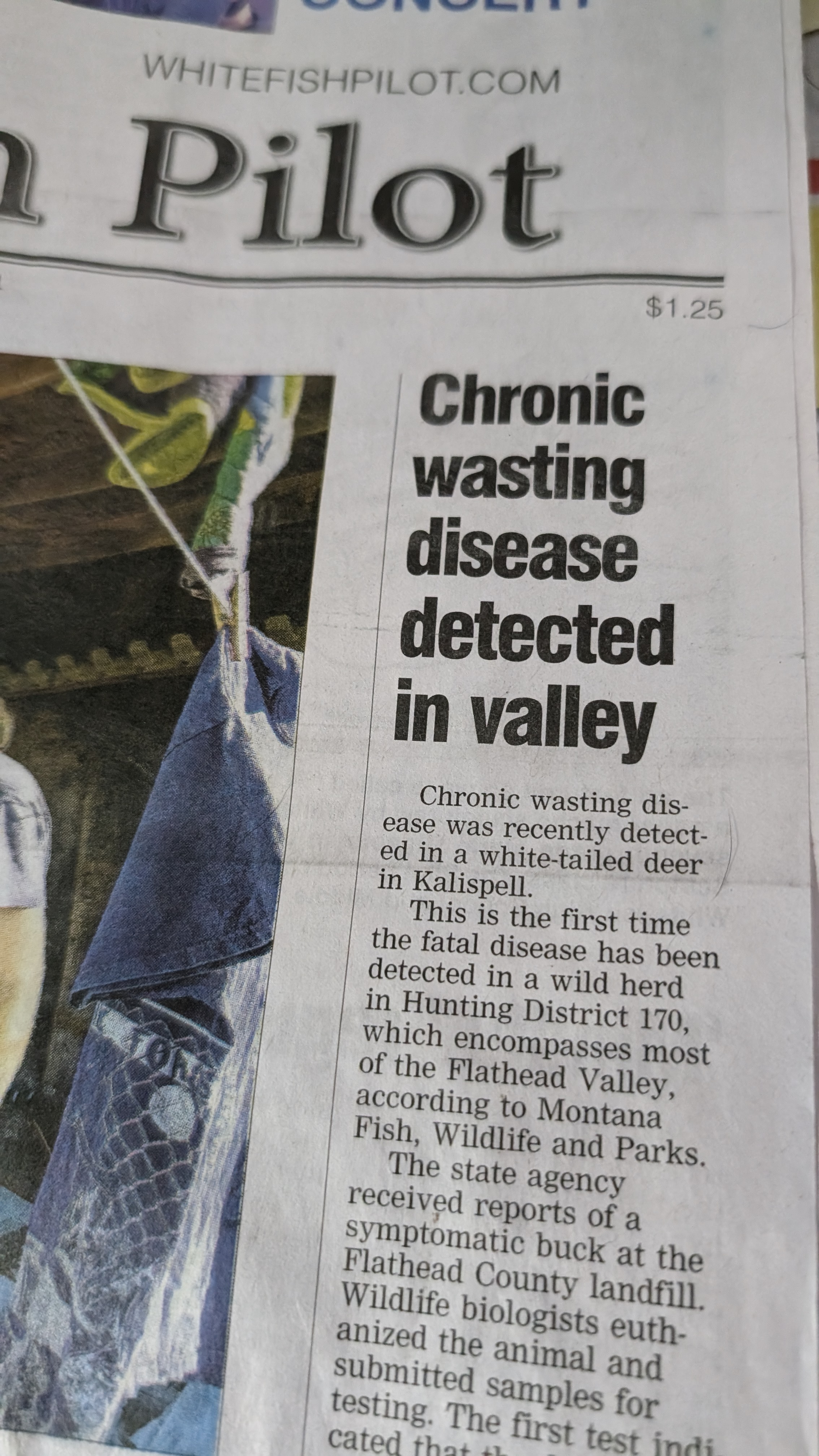
My last note was early last year also on Chronic Wasting Disease, but prion disease is back in the news. This time, due to its dramatic spread within dense areas across Montana’s High Line, the Southern Border and in the Yaak area. No cases have been identified in Glacier National Park, but a close friend accosted a thin staggering confused whitetail doe in the Hungry Horse Dam area meeting the description of an animal with advanced disease.
Prion disease is always fatal.
This scary incurable infectious disorder is primarily found in animals but there are variations that affect humans and experts expect the CWD form will eventually infect humans who consume infected game.
A real concern is the spread in big game here and across the United States (also around the world). In the 1990s, the spread to humans from eating prion infected meat killed hundreds of humans infected with the mad cow prion in Europe. The Chronic Wasting Disease prion (CWD) is a similar abnormal protein that spread to deer, moose, and elk. Over the past couple of years, it has become an epidemic in Montana deer due to its contagion.
At first just a few cases were found along the Colorado border after it spread from sheep to deer in a 1969 research study in Colorado. Now it has spread across Montana and crossed the Rockies to this area. Cases have been identified in Yellowstone National Park animals.
Infected animals show no symptoms of the disease for years but are infectious during this period so all game meat should be tested even if the animal appears normal.
Prions are not just found in lymphoid and brain tissue, they are in tissues throughout the body including muscle.
Meat handlers should wear gloves for butchering and carefully decontaminate tools and surfaces, including counters, knives, and truck beds, anything contaminated by blood. If an animal tests positive, the meat should not be consumed or used as animal feed.
Prions are difficult to destroy. Usual cleansing solutions and cooking do not destroy the abnormal infectious proteins. Incineration, and soaking surfaces, knives, and tools used in meat preparation in a 10% Clorox solution are effective. Without careful procedures, products in meat processing locations can result in cross-contamination.
Proper disposal of infected carcasses is essential because prions are stable in soil for decades, are taken up into plants and can infect grazing animals. There can also be cross species spread to scavenger animals, so unfortunately, stopping the spread is unlikely.
CWD information is found at the Fish Wildlife and Parks website:
Has prion disease in wildlife jumped the species barrierto humans?
The outbreak of mad cow disease in Great Britain cattle in shocked the world. The first sick cow was identified in 1984. By 1992-1993, 100,00 cases were identified.Over 4 million head of cattle were slaughtered to stop the spread.
The disease persisted and in 1994 people fell ill with neurological symptoms that progressed from lack of coordination to dementia, being bedridden, and death. The next year, the first human death, a 19 year-old-man occurred. The disease was linked to eating infected meat. It not only spread to humans, pet cats and zoo animals died.
Authorities had assured the people that eating beef was safe because a similar prion disease in sheep called scrapie did not result in human disease if consumed. Researchers found the cause of the infected beef was because animal feed had been supplement with contaminated protein slurry from rendering plants where carcasses of sick animals were taken.
As a physician, my interest in infectious diseases resulted in researching prion disease over years. It is not caused by a virus or a bacterium, it results from an abnormal protein called a prion that becomes infectious when its molecular structure changes. There are a number of prion diseases, some are infectious like mad cow, others are inherited disorders. They vary in duration of illness and symptoms, but all are fatal. There is no treatment.
Chronic Wasting Disease in deer was first identified a Colorado research center in 1967 after exposure to scrapie infected sheep. I worried it could spread to humans from infected venison like the bovine disease had in Great Britain.
In a Canadian study on primates fed CWD infected venison, the monkeys died. The close genetic relationship to humans made it likely it could infect humans. There is a species barrier but the protection is incomplete. There are forms of prion disease in many mammals including sheep, mink and mice.
This month, a report in the journal of Neurology stated two hunters died in 2022 from a rapidly progressive form of prion disease. It appears to be transmission of CWD to humans from eating infected venison.
My medical thriller Fatal Feast explores a story line using this concept. I will share my author note from the publication in 2019 below:
AUTHOR NOTE
Fatal Feast is fiction, but prions are real and universally fatal. Prions are abnormally twisted proteins that recruit normal proteins to change conformation and clump, damaging the body. In the diseased state, the abnormal proteins are found throughout body fluids and in muscle, but the nervous system and the brain are most affected.
Prion disease is easily transmissible via surfaces contaminated by contact with infected body fluids and tissues. These deadly, infectious proteins kill people in the United States today as they did in Great Britain in the 1990s. Patients have died from blood transfusions, contaminated neurosurgical instruments, and tissue transplants. Some forms of prion disease are inherited.
The fascinating history of the discovery and consequences of abnormal prions can be found in many sources. The most recent outbreak occurred in the United Kingdom killing more than two-hundred people who contracted the deadly disease by eating beef from infected cattle. Prion disease spread by consuming the bovine sources is called variant Creutzfeldt-Jakob disease or vCJD. Millions of cows were euthanized and incinerated to stop the spread, but shipments of infected meat products spread the disease to other countries during the U.K. epidemic. Initially, this outbreak was concealed by authorities until it could no longer be hidden from the public.
GRAND OPENING WEEKEND OF BARNES AND NOBLE IN KALISPELL, MONTANA
The new store opened this morning with a large crown awaiting the ribbon cutting ceremony. Many local authors are scheduled for events beginning today. Please come and join the crowd. I’ll be there on Saturday morning.
A report from Montana Fish Wildlife and Parks yesterday revealed the epidemic spread of a devastating incurable disease in deer across the state. A report of the eastern part of the state showed the disastrous spread among mule and white-tailed deer.
Chronic Wasting Disease (CWD) is universally fatal. It is found in wildlife on both sides of the Rocky Mountains. In the lower Ruby Valley in Hunting District 322, the report noted 71% of white-tailed does, 73 % of white-tailed bucks and five of 10 mule deer harvested in that hunt area were infected. Moose and elk are also affected.
Decades ago, when mad cow disease surfaced in the United Kingdom, killing hundreds of humans who ate infected meat I began studying the disease and the progress in research. The unusual disease is caused, not by an infectious organism such as a virus or bacterium, instead an abnormally shaped protein propagates itself when in contact with normal prion proteins and targets nerve tissue including the brain. This prion disease (the bovine form in Mad cow disease) had not been identified in humans until the outbreak in Great Britain.
That outbreak triggered massive changes in blood supplies and across medical fields to avoid the spread. Contaminated surgical instruments infected patients and killed surgeons and pathologists who infected themselves during procedures and dissections before researchers found prions were difficult to kill and remained viable on instruments sterilized by usual means.
A variant prion form able to cross species barriers spread into wildlife decades ago and was localized to a small area in Colorado. That changed dramatically as the highly infectious protein spread into roaming animal populations.
When I decided to write a novel about chronic wasting disease, I feared it would spread to humans. At this time, no human has been identified with this form. However, in a Canadian research project, monkeys were fed CWD-infected venison and they all died of the disease. Because of our genetic similarities, it appears in time, it will spread to humans who consume infected game meat unknowingly.
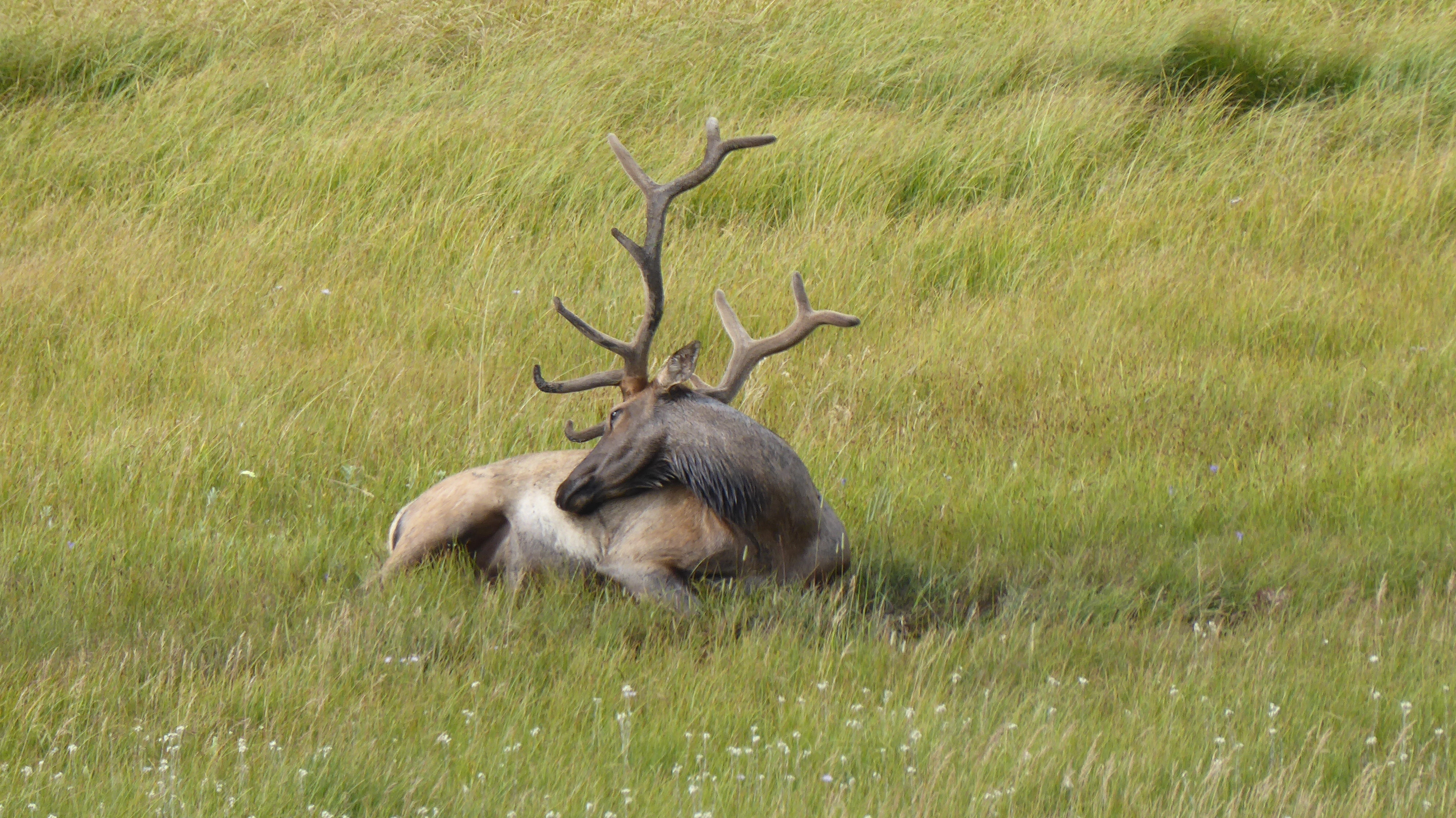
In advanced stages of the disease, infected animals are emaciated, drooling, unable to eat, lack coordination, and become unafraid of humans. It’s obvious to tell the animals is sick, but the disease is slowly progressive and it takes a couple of years to show symptoms, so hunters and the people who eat the wild game could be infected by meat from animals that look healthy.
Testing for CWD is essential to prevent spread, but the prion is so durable it can live for decades in the soil and is taken up into vegetation. Unless all knives and surfaces contaminated with diseased blood are treated properly and soaked with concentrated solutions of Clorox, they remain contaminated and could spread disease. MFWP and other national wildlife sites have directions for decontamination.
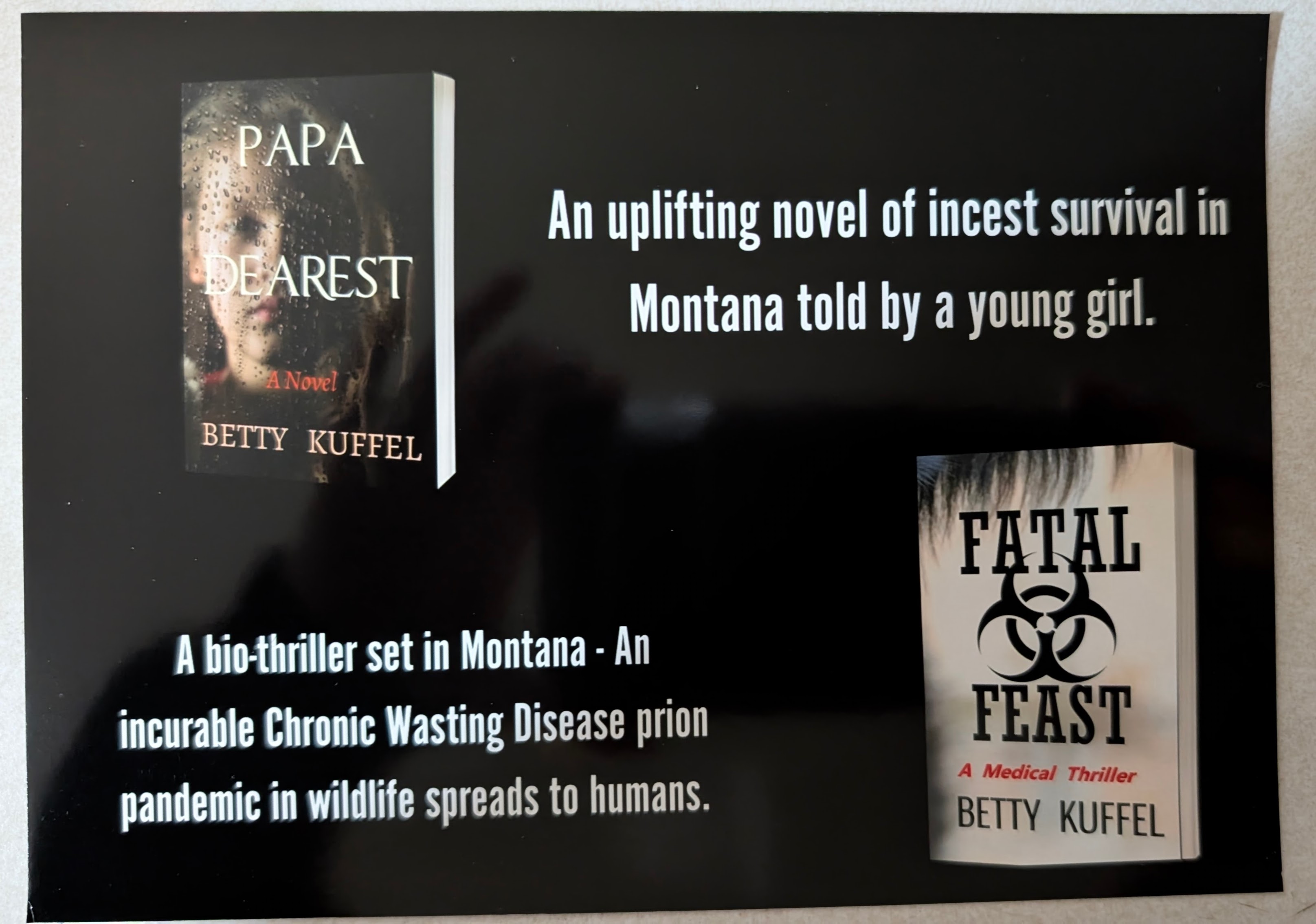
My book Fatal Feast is a medical/biological thriller set in Montana and written before the dramatic spread of the disease across our state. The E-book is on sale today through the end of the month at Smashwords for $1.99.
REVIEW: Fatal Feast is both a thriller and science-driven story with a female-super-hero at the forefront. A must read.Susan Purvis, Author of best-selling award-winning Go Find
August 2nd was a day to remember for me. I have had many memorable events, including the following: Climbing Mount Rainier and staying overnight on the summit, flying a sailplane to 20,000 feet over the Sierra Nevada mountains on oxygen, taking aerobatic flight lessons, doing loops, rolls and hammerheads, racing sled dogs in Alaska, graduating from medical school with honors at age 42, having a great husband who encouraged me to do what I wanted to do, having a great son & daughter-in-law and living long enough to see my perfect granddaughter reach age 16. Oh, and I survived a plane crash in snowy mountains with multiple fractures, requiring helicopter rescue. I’ve driven formula Fords and driven faster than many people in a Porsche 928 on Seattle International Raceways. I’m a marksman, knitter, painter and writer with too many projects to count, but on August 2nd I did something I never imagined would be possible.
I climbed the winding staircase to the Land of Octogenarians. I can’t believe I’m 80! We celebrated at the Whitefish Lake Golf Course Restaurant, my favorite place to eat. A glass of good wine, lobster and dinner with dear friends. Cheers!
Today I completed formatting and uploaded the finalized Papa Dearest manuscript for my paperback. I soon see if it was acceptable and if so, I will publish it.
Today dawned bright and the few clouds dissipated leaving behind a clear sky. August is my favorite month for watching meteors. Our unobstructed view from northwest to east makes sitting on the deck a comfortable location for stargazing and with little light pollution.
I have so many interests and I don’t have for all of them. I seem to come up with a new project every day and found YouTube is my friend. It is surprising what you can learn from short tutorials – everything from formatting to designing your own book covers. I’ll share some favorite things that stimulate my writing productivity. I have finished ten books in the past ten years, two of them are still in an editing phase and I hope to publish them in 2022. I published #8 today.
The Perseid meteor shower peaks August 11th but I have seen a few already. The shower is active between July 14th and September 1st. At the peak, the estimate is 50-75 meteors per hour but in the past, some of my best viewing times were about 30 per hour between midnight and 0200.
There are always satellites transiting and I have seen a couple of the Starlink Satellite trains. The first one I saw overhead was shocking, a UFO to me until I realized what it was. An ice fisherman friend has seen many of them when gazing at the starry black sky from frozen lakes. Here is a link if you haven’t seen them: https://www.youtube.com/watch?v=b1plc-ckppo
Weather in the past week has been hot for us here in the northern mountains, nearing 100 degrees a couple of days. A worrisome forest fire blew up yesterday about fifty miles south of here along Flathead Lake but there is no wind to drive the flames this morning. I’m hoping they have controlled the spread, protecting lives and land. Last year our skies were often obscured by smoke pollution from western fires, so meteor viewing was poor. I hope it is better this year and we are spared a bad fire season.
I am happy to be home and celebrating my 80th birthday with Tom, surrounded by furry friends and things I enjoy. My furry and feathered friends are close by. They keep me company when I ‘m writing. The sunny room on the north side of the house has become a plant nursery, they keep me company, too, making morning rounds in the plant ICU to see how everyone is doing.
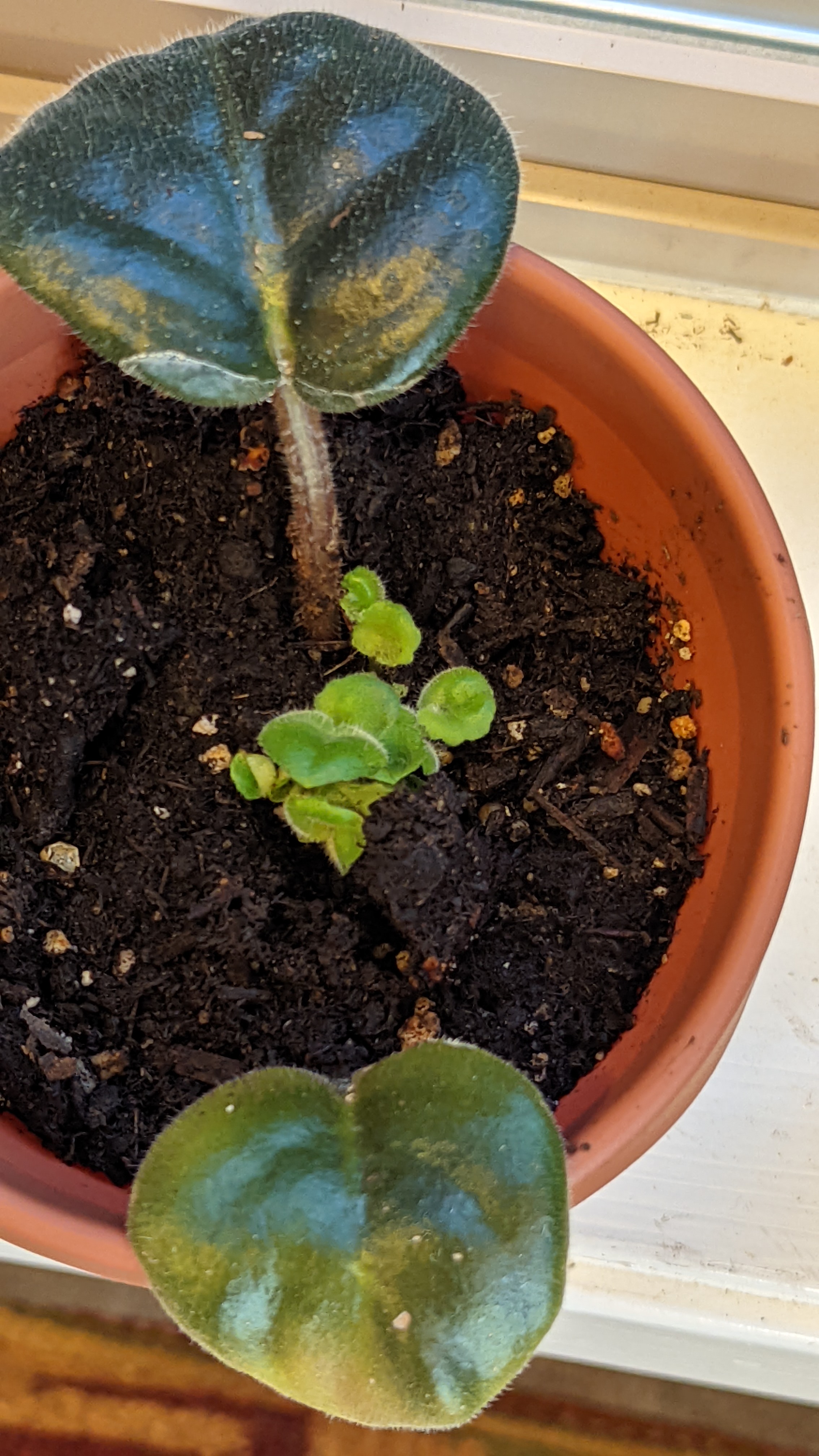
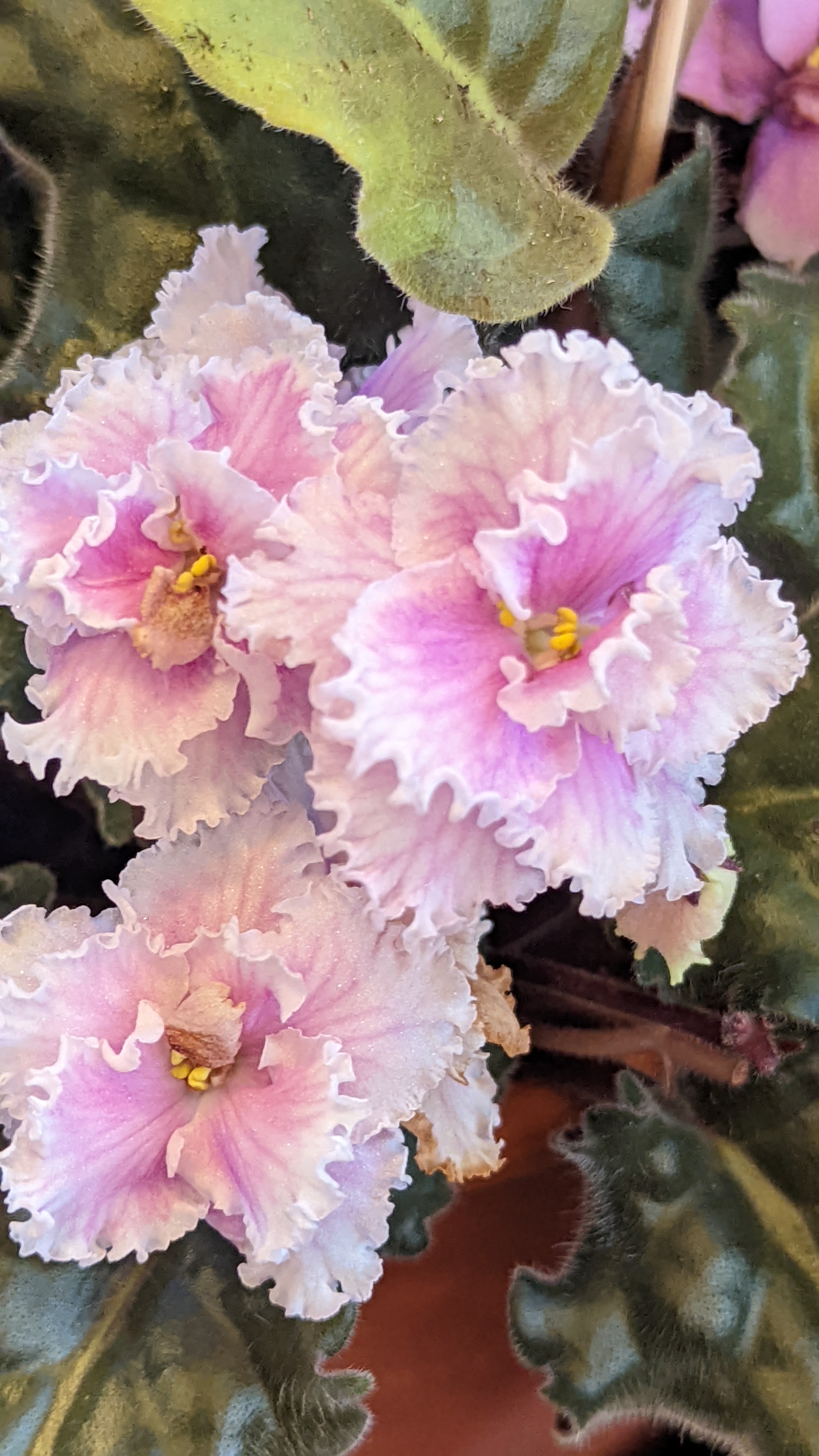
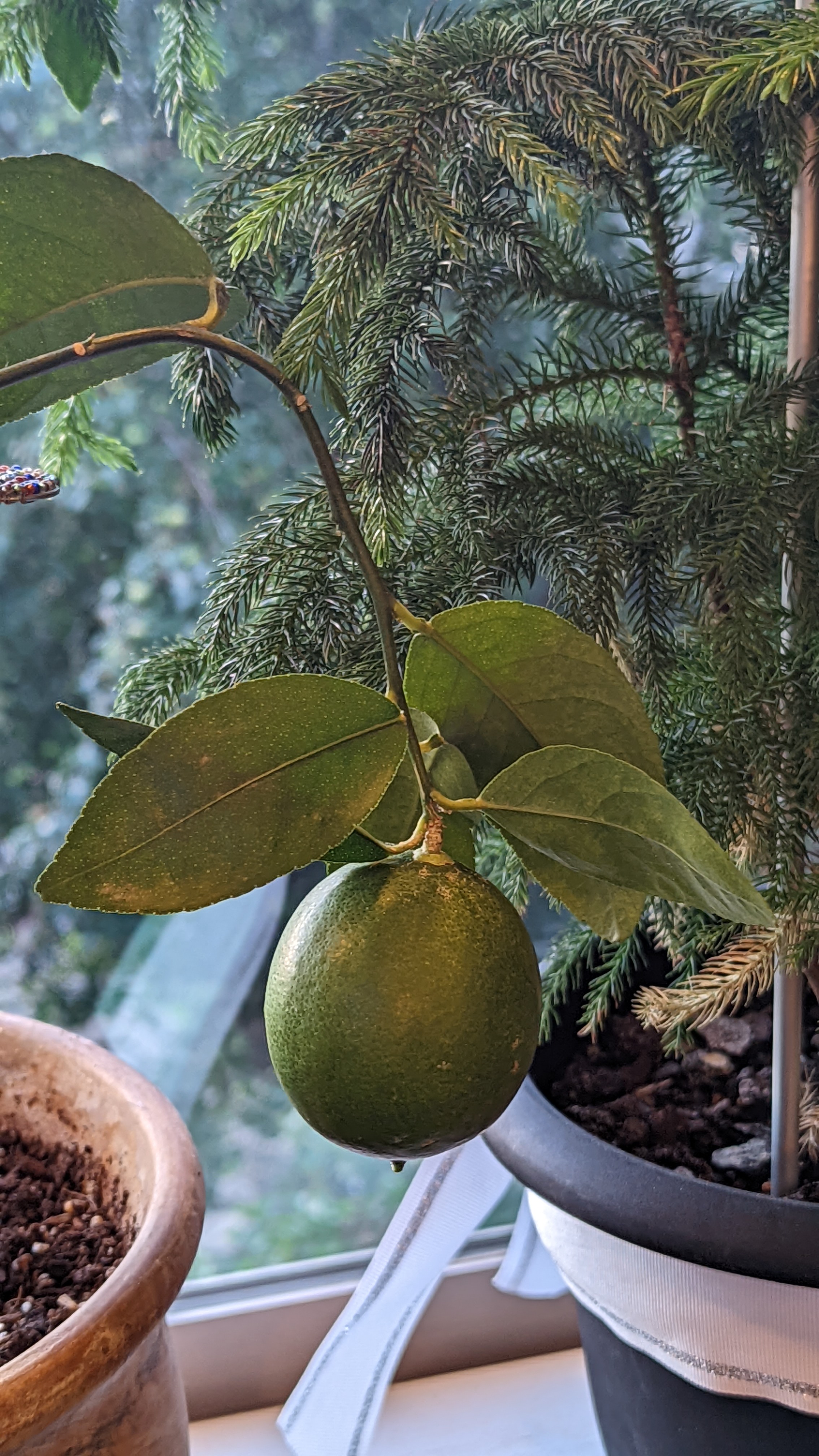
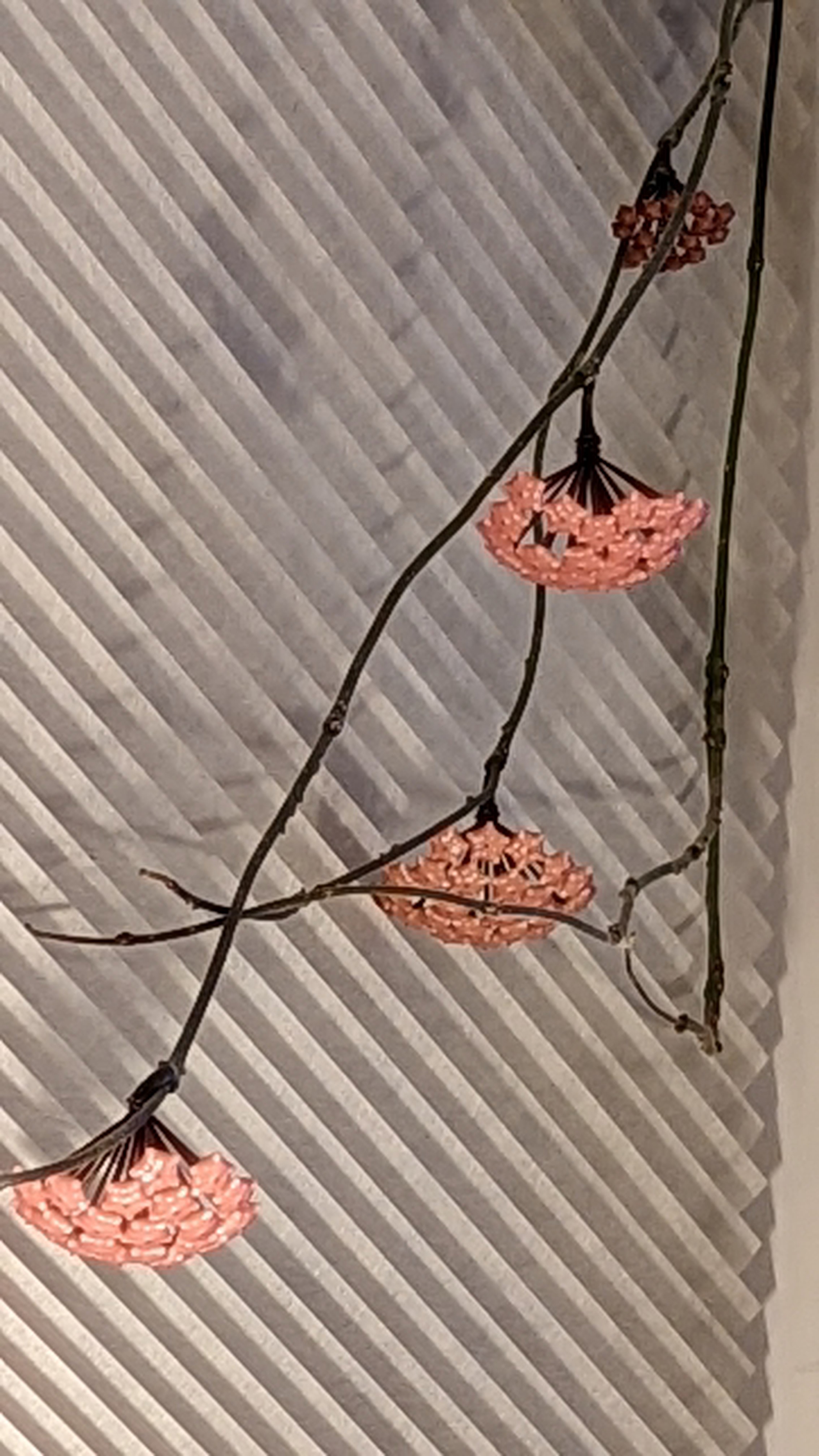
I have three avocado trees planted from seeds that have reached the ceiling, though haven’t produced any fruit. However, my lime tree is producing and I recently enjoyed a gin and tonic on a hot day made with a lime I grew. My Hoya plant of Hawaiian vintage is climbing up the walls and produces multiple flowers that are beautiful. A recent venture is to nurture African violets and was delighted to see one newly rooted leaf has given birth and needs no resuscitation!
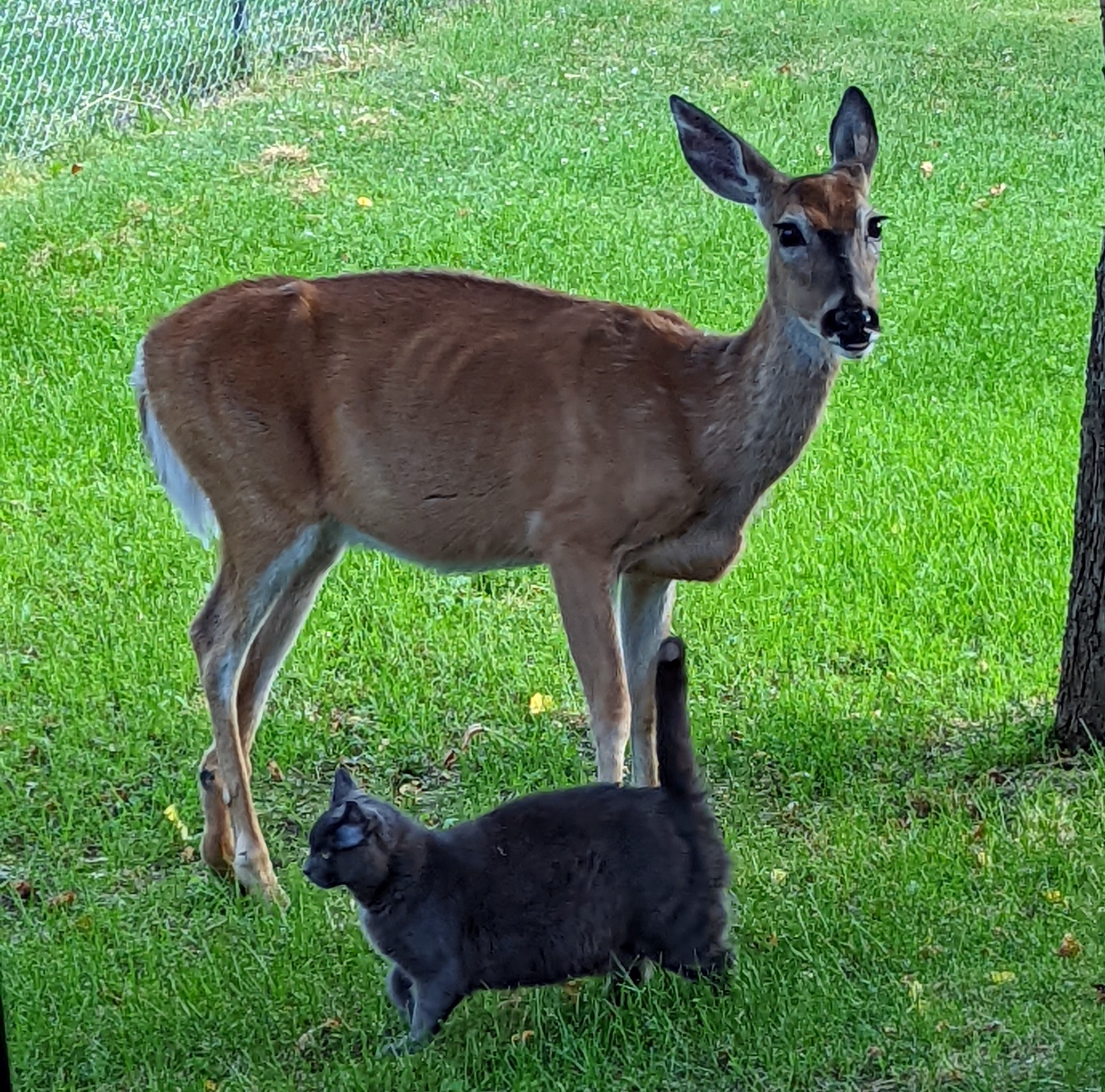
Siniy, my feral cat rescued a year ago was very wild, but now she lets me brush her every day and has a special friendship with a neighborhood deer I named Lucky. She is a wonderful doe that suffered an open fracture of her hind leg about six years ago. I worried she wouldn’t survive but is resilient. The leg healed, very crooked, but she walks well and brings babies to visit most days, twins last year and a singlet this summer. She grooms the fawn and even grooms the cat.
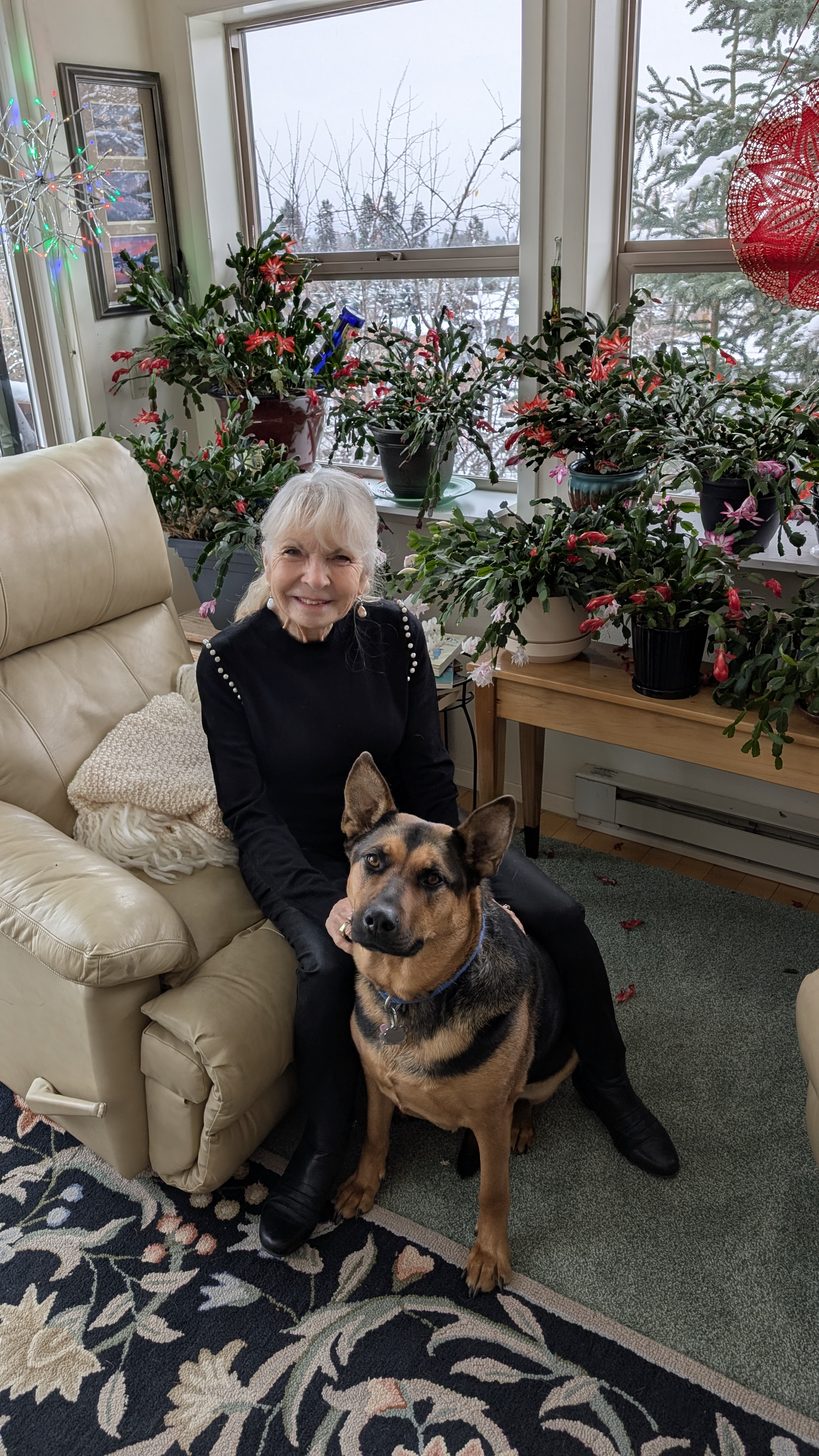
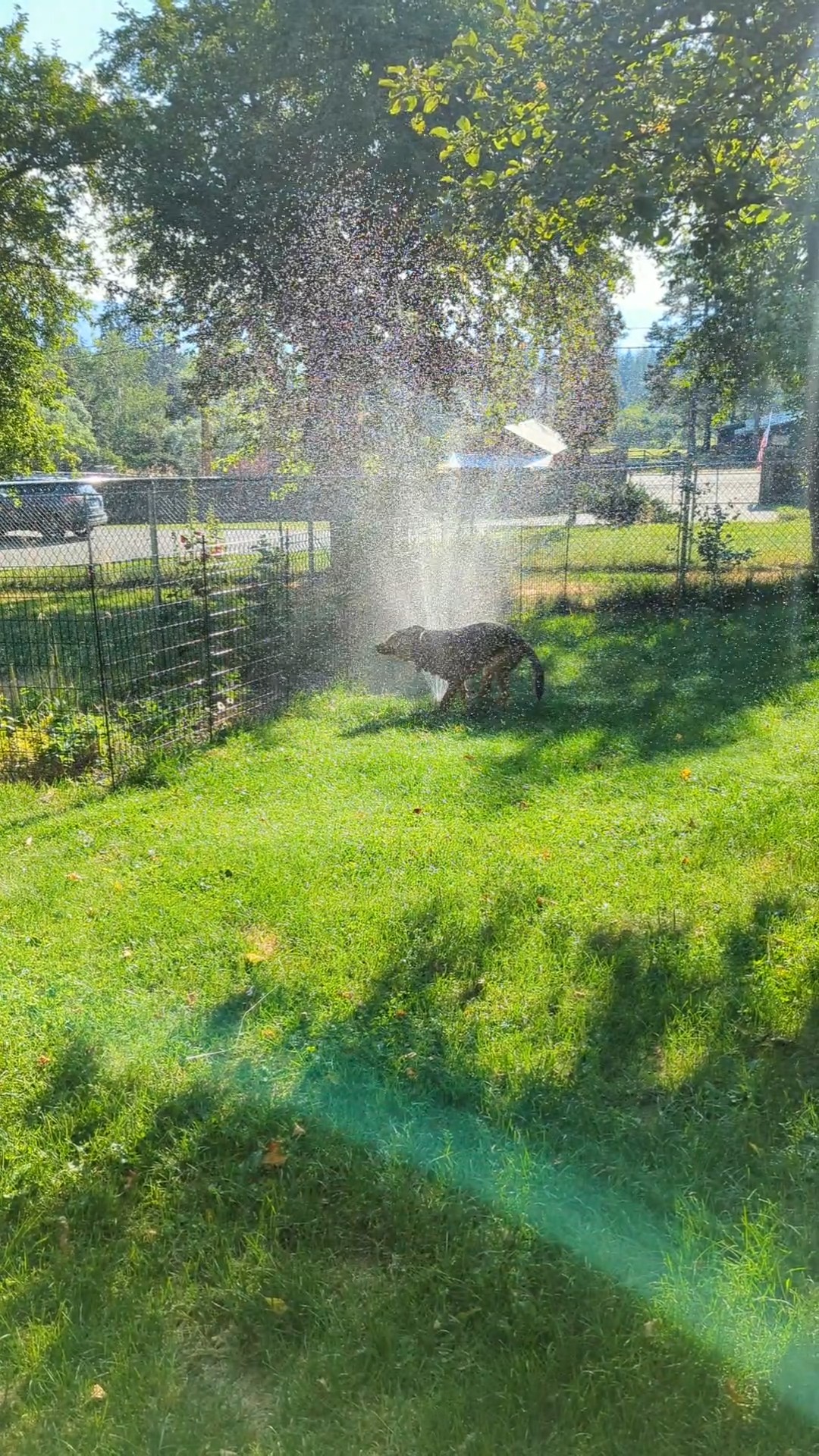
My dogs bring joy, too. Vaxine is our rescue doggie who helped us get through the COVID social separation period. She is a joyful wonderful German shepherd mix who loves the sprinkler and gets along well with 12-year-old Gracie. We adopted her from a shelter. Vaxine is about two years old and had been abused. She has buckshot in her face and had many broken teeth. She recently had a root canal procedure then a filling in a lower fang, and six other teeth repaired. Now, she has a beautiful but costly smile 🙂
The photos below show some of my furry writing friends and things that make me smile. We also have a flock of wild turkeys. The funny babies are about the size of chickens. I practice photography skills on my children.
I hope this day finds you happy and with a passion, something that makes you smile and have a reason to get up and meet each day. I used to think age 40 was very old, now I have doubled that age and my view has changed. I only feel old when I look in the mirror and see my mother. But she was a positive dynamic role model who believed there was a solution to every problem. I feel very fortunate to have known her.
This morning, I drank my first cup of favorite hazelnut coffee on the deck with the dogs as we watched sunrise to the music of birdsong. Then, I went to work. After a few hours to wait for the safety of bright light to avoid the neighborhood black bear, I took Vaxine for a walk.
August will be a big month for me. I decided to release my eighth book on my 80th birthday! I chose the release date at a milestone in life for me. I was seriously considering remaining seventy-nine because it sounded so much younger, but I decided instead to be happy no matter what the age, look forward to more good times, and enjoy life.
I start most days sitting at my computer desk with a cup of coffee, or on the deck with my two dogs, and watch the sun rise over the Rocky Mountain. Brilliant colors paint the sky and streak light across beautiful terrain to the music of early morning birdsong. When their songs fade and before I get to work, I tune in a background on Spotify, often jazz, Creedence Clearwater Revival or something else that fits my mood or the scene I’m writing.
Despite distractions by the latest political updates interrupting my writing goals and stimulating me to write letters to members of Congress or opinion letters, I just completed Papa Dearest. It is a novel but like my three non-fiction books, I was driven to write this one to address a common serious problem the World Health Organization considers a silent health emergency.
This fictitious story line of generational incest is told through the eyes of a young female victim. Papa Dearest encompasses common character behaviors identified through interviews in addition to extensive literature research. The book was difficult to write because incest is verboten. This German term for forbidden exemplifies the absolute prohibition of sexual acts on a child, abuse so abhorrent even discussion of the topic is often forbidden.
When someone a child trusts, such as a father, grandfather, stepfather, uncle, brother or other family member deemed a protector sexually assaults the young victim, the perpetrator has crossed the forbidden line.
If incest is reported to authorities revealing the actions of the perpetrator on a child, many lives are changed forever. The child is saved from entrapment and continued assaults but requires skilled extended counseling. The perpetrator is removed from the family, shunned, disgraced, fired from work and imprisoned. The family is in crisis and sometimes the child is blamed.
Both boys and girls are victimized. They are often threatened with death should they tell. Because of the high price of telling, most victims of incest hide their pain over a lifetime.
Combined with a verboten incident in my family and knowing numerous victims who trusted me with their personal stories of devastating emotional and physical harm, I decided to write about the topic.
Victims entrusted me with their stories with the hope of helping others end ongoing abuse by learning escape and recovery are possible.
ABOUT THE BOOK
PAPA DEAREST
After her mother’s death, twelve-year-old- Anna’s bondage under the control of her religious father in an isolated Montana prairie town turns even worse when she finds herself pregnant.
Papa Dearest is available as an e-book on pre-order at both Smashwords and Amazon.
After release on August 2, it will be distributed through their channels from many sites. If you’d like to pre-order an e-book now, here are the links:
Please write a review at the site of your preferred retailer.
A paperback edition will be available soon and an audio book is in the works.
The Montana Sunrise Blog
Two more books are coming soon. If you’d like to hear about them, about life in Montana, and follow some of my photo odysseys to Yellowstone and elsewhere, please subscribe to my blog at: https://bettykuffel.com
After few blog posts lately, I have recently completed some writing projects and returned to this blog to share some writing tips, photography, art, and some of my writing.
I have just finished my eighth book, Papa Dearest. It will be published soon. The topic has troubled me for decades. Unlike my first book, Eyes of a Pedophile, the true crime story about violent pedophile Nathanael Bar-Jonah I met when working in an ER, Dearest Papa is a novel I hope may help a victim of incest find strength to escape and find help.
The World Health Organization classifies incest as a silent health emergency. The pervasive behavior is so abhorrent victims often carry the pain to their graves. Learning Anna’s story may help other victims gain strength and find help.
PAPA DEAREST
Following her mother’s death. a young girl named ANNA tells her story of surviving a hidden life of generational abuse in rural Montana at the hands of her religious father.
FORBIDDEN
Years of work as an ER physician brought me in contact with numerous victims. Stopping abusers is everyone’s responsibility. Key to saving the children is reporting abuse to authorities including child protective services. A safe environment and proper counseling are key to victim recovery for all forms of sexual assault.
The German word verboten describes incest, absolute forbidden sex acts between family members. Stories of incest are so distasteful they are usually told in whispers if shared at all. Most victims carry the secrets of abuse to their deaths, never revealing the forbidden truth of horrendous actions endured at the hands of a person deemed a protector.
Decades ago, I learned incest occurred in my family. My great grandfather, a German immigrant, impregnated his young daughter Anna who bore a child she named Sophia. The little girl was raised in the family as a cousin and never acknowledged as a daughter, ever. My mother knew Anna and Sophia. She whispered the story to my oldest sister, but details remained verboten to discuss.
How do we stop the abuse of children? They are vulnerable and require protection and education to help them learn to defend themselves. Even in the most protective families, children are at risk and may be harmed by people known to the family including relatives and friends. Sexual predators are not typically strangers, they are usually known to the family and the child.
Incest is the ultimate immoral act of the sexual abuse of a child. This behavior often occurs with the knowledge of other family members including mothers who do nothing, leaving the silenced child unprotected, in a state of ongoing crisis and fear.
Papa Dearest is a novel, but is based on extensive research and interviews with survivors of incest. They are friends and relatives who trusted me with their painful stories to share in hopes of helping others escape the entrapment of incest.




















 Author Betty Kuffel, MD